


























-
Handbook of Teaching Competency Development In Higher Education
Jiangang Cheng, Wei Han, Qian Zhou, and Shuyan Wang
This is an open access book. It draws from relevant theories and approaches to teachers’ professional development (TPD) and innovative and inspiring TPD practices in higher education. It first lays a solid foundation for the rest of the book, through critiquing prevalent theories, approaches, and teaching competency frameworks guiding TPD in higher education, and defining the key concepts related to TPD. The book then develops a standard framework and assessment instrument of teaching competencies as well as ways of using this framework by institutions, departments at different levels, and individual teachers. It also proposes strategies for improving teachers’ teaching competencies by reviewing what has been achieved to date in TPD in terms of national-level policies and strategies, institutional-level interventions, and teachers’ self-directed professional development. Finally, it also presents case studies of typical practices in TPD in different countries.
-
Perspectives On Transforming Higher Education and the LGBTQIA Student Experience
Andrew Herridge and Kaity Prieto
Today’s institutions of higher education must continuously adapt to meet the evolving needs and expectations of each new generation of students. A significant and growing presence within academia is the LGBTQIA community. LGBTQIA individuals are now four times more likely to attend higher education institutions away from home. However, a substantial proportion of these students remain unseen, with more than half avoiding exposure of their identity to faculty and staff, and in some cases even to their peers.
Perspectives on Transforming Higher Education and the LGBTQIA Student Experience is a comprehensive academic exploration of the intricate world of LGBTQIA students in higher education. This book sheds light on the multifaceted challenges and complexities that LGBTQIA students face, transcending the boundaries of sexual orientation, gender identity, race, ethnicity, ability, and socio-economic class.
Perspectives on Transforming Higher Education and the LGBTQIA Student Experience is a seminal work designed to enlighten and inform students, faculty, student affairs practitioners, higher education administrators, and policymakers, and is structured to provide a holistic understanding, this book encompasses critical themes, including LGBTQIA student identity development, the intersectionality of identity, LGBTQIA student experiences within the campus climate, and the impact of laws and policies on their lives. This book also explores a diverse range of topics, spotlighting often under-researched and underrepresented communities and experiences. These topics encompass the intricacies of bisexuality and pansexuality, transgender and intersex students, the challenges of asexuality, and the unique experiences of cross-border education, and queer and trans students of color. The book also delves into intersections with disability, religion, and the distinctions between public and private institutions and 2-year and 4-year colleges.
-

The Modern Legacy of Gibson's Affordances for the Sciences of Organisms
Madhur Mangalam, Alen Hajnal, and Damian G. Kelty-Stephen
This edited collection provides a comprehensive and empirically informed discussion on affordances and their role in studying goal-directed behavior, covering philosophical, experimental psychological, neuroscientific, and applied perspectives.
Showcasing the work of expert contributors from different backgrounds, the book inspires new directions for future research in affordances. Chapters address questions relating to the definition and perception of affordances, their advantages over stimuli, the relationship between affordances and behavior, and how systems engage with affordances in different tasks and intentions. This question-based format provides a distinctive perspective that allows for a thorough exploration of the expansive field of affordance research.
This book serves as a crucial resource for seasoned scientists, researchers, and undergraduate and graduate students in the fields of ecological psychology, sensation and perception, cognition, and the philosophy of cognitive science, as well as non-academic individuals interested in mind sciences broadly construed. It provides valuable insights and knowledge in these fields, making it an essential reference for those seeking to deepen their understanding in the areas of perception and cognition.
-
LGBTQIA Students In Higher Education: Approaches To Student Identity and Policy
Kaity Prieto and Andrew Herridge
Today’s institutions of higher education must continuously adapt to meet the evolving needs and expectations of each new generation of students. The LGBTQIA community’s presence in academia is significant and continues to grow. The individuals who identify with this community are four times more likely to attend higher education institutions away from home. However, a substantial proportion of these students remain unseen, with more than half avoiding exposure of their identity to faculty and staff, and in some cases even to their peers.
LGBTQIA Students in Higher Education: Approaches to Student Identity and Policy is a comprehensive academic exploration of the intricate world of LGBTQIA students in higher education. This book sheds light on the multifaceted challenges and complexities that LGBTQIA students face, transcending the boundaries of sexual orientation, gender identity, race, ethnicity, ability, and socio-economic class.
LGBTQIA Students in Higher Education: Approaches to Student Identity and Policy is a seminal work designed to enlighten and inform students, faculty, student affairs practitioners, higher education administrators, and policymakers, and is structured to provide a holistic understanding, this book encompasses critical themes, including LGBTQIA student identity development, the intersectionality of identity, LGBTQIA student experiences within the campus climate, and the impact of laws and policies on their lives. This book also explores a diverse range of topics, spotlighting often under-researched and underrepresented communities and experiences. These topics encompass the intricacies of bisexuality and pansexuality, transgender and intersex students, the challenges of asexuality, and the unique experiences of cross-border education, and queer and trans students of color. The book also delves into intersections with disability, religion, and the distinctions between public and private institutions and 2-year and 4-year colleges.
-
Pathophysiology: A Practical Approach
Lachel Story
Pathophysiology: A Practical Approach, Fifth Edition provides an innovative, practice-ready, approach to foundational pathophysiology for pre-licensure nursing students. Dr. Story takes a student-focused approach to the challenging subject formatted with vibrant graphics and easy-to-read practice tools. Her text is organized by body system, and she has organized the content into topical chapters that walk students through their base knowledge of A&P, what can go wrong with the human body, how to identify the problem, and what actions they need to take. This student-friendly approach empowers readers to take a more active role in learning pathophysiology.
The Fifth Edition is unique in its application to practice. Key features walk the reader through challenging topics and latest insights in pathophysiology, leveraging recent ground-breaking studies discussed in the updated and expanded Emerging Research sections, and offering new Application to Practice callouts that deepen the connection between classroom and clinical setting. Students and faculty praise Pathophysiology: A Practical Approach for its innovative presentation, helpful Next Generation NCLEX-style questions, approachable reading style, dynamic images, and coverage of current research.
-
Reimagining Science Education In the Anthropocene, Volume 2
Sara Tolbert, Maria F.G. Wallace, Marc Higgins, and Jesse Bazzul
This volume, a follow up to Reimagining Science Education in the Anthropocene (2021), continues a transdisciplinary conversation around reconceptualizing science education in the era of the Anthropocene. Drawing educators from many walks of life and areas of practice together in a creative work that helps reorient science education toward the problems and peculiarities associated with this contemporary geologic time. This work continues the mission of transforming the ways communities inherit science and technology education: its knowledges, practices, policies, and ways-of-living-with-Nature. Our understanding of the Anthropocene is necessarily open and pluralistic, as different beings on our planet experience this time of crisis in different ways. This second volume continues to nurture productive relationships between science education and fields such as science studies, environmental studies, philosophy, the natural sciences, Indigenous studies, and critical theory in order to provoke a science education that actively seeks to remake our shared ecological and social spaces in the coming decades and centuries. This is an open access book.
-
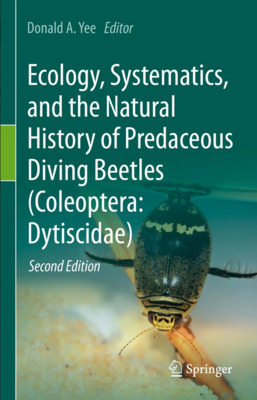
Ecology, Systematics, and the Natural History of Predaceous Diving Beetles (Coleoptera: Dytiscidae)
Donald A. Yee
The 2nd edition of this comprehensive book provides one of the most complete overviews of the aquatic beetles in the family Dytiscidae, also known as predaceous diving beetles. Dytiscids constitute one of the largest families of freshwater insects with approximately 4,650 named species that come in a variety of sizes, colors, and habitat affinities. Although dytiscid adults and larvae are ubiquitous throughout a variety of aquatic habitats, and are important predators on other aquatic invertebrates and vertebrates, there are no compilations that have focused on summarizing the knowledge on aspects of their ecology, systematics, and biology. Chapters in this book summarize hitherto scattered topics, including their anatomy and habitats, chemical and community ecology, phylogenies and larval morphology including chaetotaxy, sexual systems, predation, dispersal, conservation, and cultural and historical aspects. The 2nd edition offers updates on the newest scientific findings on dytiscids and also includes a new chapter on the subterranean fauna from Australia. The information in this new edition is potentially beneficial to anyone working in aquatic systems where dytiscids are an important part of the food web. Moreover, readers will gain a greater appreciation of dytiscids as model organisms for investigations of fundamental principles derived from ecological and evolutionary theory. Contributed chapters are by authors who are actively engaged in studying dytiscids, and each chapter provides color photos and future directions for research.
-
West Nile Virus: Methods and Protocols
Fengwei Bai
This volume provides researchers with the most updated understanding of the basics of West Nile Virus (WNV). Chapters focus on the biology, virology, epidemiology, pathogenesis, as well as the step-by-step molecular, cellular, and statistical methods to study WNV infection in cell culture, mosquitos, animal models, and human clinical specimen. Written in the highly successful Methods in Molecular Biology series format, chapters include introductions to their respective topics, lists of the necessary materials and reagents, step-by-step, readily reproducible laboratory protocols, and tips on troubleshooting and avoiding known pitfalls.
Cutting-edge and comprehensive, West Nile Virus: Methods and Protocols aims to be a valuable resource for all researchers interested in learning more about this important and developing field.
-
Buddhist Ecological Protection of Space: A Guide For Sustainable Off-Earth Travel
Daniel S. Capper
This seminal monograph provides the essential guidance that we need to act as responsible ecological citizens while we expand our reach beyond Earth. The emergence of numerous national space programs along with several potent commercial presences prompts our attention to urgent environmental issues like what to do with the large mass of debris that orbits Earth, potential best practices for mining our moon, how to appropriately search for microscopic life, or whether to alter the ecology of Mars to suit humans better. This book not only examines the science and morals behind these potential ecological pitfall scenarios beyond Earth, it also provides groundbreaking policy responses founded upon ethics. These effective solutions come from a critical reframing for scientific settings of the unique moral voices of diverse Buddhists from the American ethnographic field, who together delineate sophisticated yet practical values for traveling through our solar system. Along the way, Buddhists fascinatingly supply robust environmental lessons for Earth, too. As much a work of astrobiology as it is one of religious studies, this book should appeal to anyone who is interested in space travel, our human environment in large scale, or spiritual ecology.
-
The World of Obsessive-Compulsive Disorder: The Experiences of Living With OCD
Dana Fennell
Obsessive-Compulsive Disorder (OCD) affects millions of people worldwide and looms large in popular culture, for instance when people quip about being “so OCD.” However, this sometimes has little relation to the actual experiences of people diagnosed with the disorder. In The World of Obsessive-Compulsive Disorder, Dana Fennell explores the lives of people who have OCD, giving us fresh insight into a highly misunderstood, trivialized, and sometimes stigmatized mental disorder that has no surefire cure.
Drawing primarily on interviews with people who have OCD, Fennell shows us the diversity of ways the disorder manifests, when and why people come to perceive themselves as having a problem, what treatment options they pursue, and how they make sense of and manage their lives. From those who have obsessions about their sexuality and relationships, to those who check repeatedly to make sure they have not caused harm, she sheds light on the hopes, expectations, and difficulties that people with OCD encounter.
Fennell reveals how people cope in the face of this misunderstood disorder, including how they manage the barriers they face in the workplace and society. An eye-opening read, The World of Obsessive-Compulsive Disorder encourages us to consider, empathize with, and take steps to improve the lives of people with mental health issues.
-
A de Grummond Primer: Highlights of the Children's Literature Collection
Carolyn J. Brown, Ellen Hunter Ruffin, and Eric Tribunella
Contributions by Ann Mulloy Ashmore, Rudine Sims Bishop, Ruth B. Bottigheimer, Jennifer Brannock, Carolyn J. Brown, Ramona Caponegro, Lorinda Cohoon, Carol Edmonston, Paige Gray, Laura Hakala, Andrew Haley, Wm John Hare, Dee Jones, Allison G. Kaplan, Megan Norcia, Nathalie op de Beeck, Amy Pattee, Deborah Pope, Ellen Hunter Ruffin, Anita Silvey, Danielle Bishop Stoulig, Roger Sutton, Deborah D. Taylor, Eric L. Tribunella, Alexandra Valint, and Laura E. Wasowicz During the 1960s, a dedicated library science professor named Lena de Grummond initiated a letter-writing campaign to children’s authors and illustrators requesting original manuscripts and artwork to share with her students. Now named after de Grummond, this archive at the University of Southern Mississippi has grown into one of the largest collections of historical and contemporary youth literature in North America with original contributions from more than 1,400 authors and illustrators, as well as over 185,000 volumes. The first book-length project on the collection, A de Grummond Primer: Highlights of the Children's Literature Collection provides a history of de Grummond’s work and an introduction to major topics in the field of children’s literature. With more than ninety full-color images, it highlights particular strengths of the archive, including extensive holdings of fairy tales, series books, nineteenth-century periodicals, Golden Age illustrated books, Mississippi and southern children’s literature, nonfiction, African American children’s literature, contemporary children’s and young adult authors and illustrators, and more. The book includes contributions from literature and information science scholars, historians, librarians, and archivists―all noted experts on children’s literature―and points to the exciting research possibilities of the archive. De Grummond could not have realized when she wrote to luminaries like H. A. and Margret Rey, Berta and Elmer Hader, Madeleine L’Engle, J. R. R. Tolkien, Lois Lenski, Garth Williams, and others that their correspondence and contributions would form the foundation for this extraordinary trove now visited by scholars from around the world. Such major authors and illustrators as Ezra Jack Keats, Richard Peck, Rosemary Wells, Angela Johnson, and John Green continued to donate content. In addition, curators, past and present, have acquired both historical and contemporary volumes of literature and criticism.
-
Explorations In Numerical Analysis
James V. Lambers, Amber Summer Mooney, and Vivian Ashley Montiforte
This textbook is intended to introduce advanced undergraduate and early-career graduate students to the field of numerical analysis. This field pertains to the design, analysis, and implementation of algorithms for the approximate solution of mathematical problems that arise in applications spanning science and engineering, and are not practical to solve using analytical techniques such as those taught in courses in calculus, linear algebra or differential equations.
Topics covered include computer arithmetic, error analysis, solution of systems of linear equations, least squares problems, eigenvalue problems, nonlinear equations, optimization, polynomial interpolation and approximation, numerical differentiation and integration, ordinary differential equations, and partial differential equations. For each problem considered, the presentation includes the derivation of solution techniques, analysis of their efficiency, accuracy and robustness, and details of their implementation, illustrated through the Python programming language.
This text is suitable for a year-long sequence in numerical analysis, and can also be used for a one-semester course in numerical linear algebra.
-
The Cursed Carolers In Context (Studies In Medieval History and Culture)
Lynneth Miller Renberg and Bradley Phillis
The Cursed Carolers in Context explores the interplay between the forms and contexts in which the tale of the cursed carolers circulated and the meanings it had for medieval and early modern authors and audiences. The story of the cursed carolers has circulated in Europe since the eleventh century. In this story, a group of people in a village in Saxony skip Christmas mass to perform a circle dance in the cemetery, only to be cursed and forced to keep dancing for a whole year. By approaching the story in specific historical contexts, this book shows how the story of the cursed carolers became a space in which medieval readers, writers, and listeners could debate the meaning and significance of a surprising variety of questions, including ecclesiastical authority, gender roles, pastoral responsibility, and even the conduct of crusades. This consideration of the interplay between text and context sheds new light on how and why the story of the dancers achieved such popularity in the Middle Ages, and how its meanings developed and changed throughout the period. This book will appeal to scholars and students of medieval European history, literature, and dance, as well as those interested in cultural history.
-
Narrative Bonds: Multiple Narrators In the Victorian Novel
Alexandra Valint
“This engaging study of Victorian multi-plot novels makes a compelling argument that, despite the seemingly distinct and potentially disjunctive narrative voices that tell a story, those perspectives cohere in a single worldview, one that points to the middle class’s acquisition of cultural and political power and the period’s gradual movement toward a more democratic state. Valint’s book will be welcomed not only by scholars of Victorian literature but also by those interested more broadly in narrative theory.” —Elizabeth Langland, author of Telling Tales: Gender and Narrative Form in Victorian Literature and Culture
While narrative fracturing, multiplicity, and experimentalism are commonly associated with modernist and postmodern texts, they have largely been understudied in Victorian literature. Narrative Bonds: Multiple Narrators in the Victorian Novel focuses on the centrality of these elements and addresses the proliferation of multiple narrators in Victorian novels. In Narrative Bonds, Alexandra Valint explores the ways in which the Victorian multinarrator form moves toward the unity of vision across characters and provides inclusivity in an era of expanding democratic rights and a growing middle class. Integrating narrative theory, gothic theory, and disability studies with analyses of works by Charles Dickens, Robert Louis Stevenson, Wilkie Collins, Emily Brontë, and Bram Stoker, this comprehensive and illuminating study illustrates the significance and impact of the multinarrator structure in Victorian novels.
-
Reimagining Science Education In the Anthropocene
Maria F.G. Wallace, Jesse Bazzul, Marc Higgins, and Sara Tolbert
This open access edited volume invites transdisciplinary scholars to re-vision science education in the era of the Anthropocene. The collection assembles the works of educators from many walks of life and areas of practice together to help reorient science education toward the problems and peculiarities associated with the geologic times many call the Anthropocene. It has become evident that science education—the way it is currently institutionalized in various forms of school science, government policy, classroom practice, educational research, and public/private research laboratories—is ill-equipped and ill-conceived to deal with the expansive and urgent contexts of the Anthropocene. Paying homage to myopic knowledge systems, rigid state education directives, and academic-professional communities intent on reproducing the same practices, knowledges, and relationships that have endangered our shared world and shared presents/presence is misdirected. This volume brings together diverse scholars to reimagine the field in times of precarity.
-
The Obama Presidency: A Preliminary Assessment
Robert P. Watson, Jack Covarrubias, Tom Lansford, and Douglas M. Brattebo
Barack Obama's presidency is a pivotal one in American history, coming at a time of dramatic political change in the United States and amidst an astonishing array of domestic and foreign policy challenges. Not surprisingly, then, the Obama administration has been the focus of intense scrutiny by scholars, the press, and the public, and rarely has the tone of political discourse been more polarized and emotionally charged. In this book a distinguished group of scholars offers an objective and timely examination of the Obama administration; Obama's character, leadership style, and rhetoric; and his domestic, foreign, and national security policies. Engaging, lively, and highly readable, each essay offers important insight into this historic president and presidency.
-

The Navy
Andrew A. Wiest
The Navy is a colorful guide to an elite maritime force with a glorious history that plays a key role in US overseas operations and US foreign policy today. The US Navy is the largest in the world today. Deployed in every theatre, it has operational capabilities that are greater than the next 13 navies combined. The core of the Navy deployment, the carrier strike group, can bring to bear a force of more than 100 modern aircraft and 7000 Marines, which many other countries’ armed forces struggle to match. Numbering almost 350,000 active duty personnel today, the Navy emerged during the early 19th century as a guarantor of American independence in the face of British incursions in 1812 and Barbary pirate raids on American shipping in the Atlantic. The Federal navy blockaded Confederate ports during the Civil War, and helped expand US influence across the Pacific and into the Caribbean in the early 20th century. During World War II, in combination with the Marines, the Navy formed the main thrust of the fight against Japan in the Pacific and East Asia. By 1945, it was the world’s most powerful navy, and has remained so ever since. The book includes photographs from the Civil War up to the present, with a particular focus on recruitment, weaponry and modern training methods, as well as naval personnel on deployment in the Indian Ocean, Pacific and East Asia today. Highly illustrated with more than 200 photographs, The Navy is a colorful celebration of the world’s most powerful navy.
-
To Make Room for the Sea
Adam Clay
To Make Room for the Sea reckons with the notion that nothing in this world is permanent. Led by an introspective speaker, these poems examine a landscape that resists full focus, and conclude that “it’s easier to love what we don’t know.”
“I hold this leaf I think / you should see, but I can’t quite / say why,” Adam Clay writes, as he navigates a variety of both personal and ecological fixations: disembodied bullfrog croaks, the growth of his child, a computer’s dreaded blue screen of death. The observations in To Make Room for the Sea convey both grief for the Anthropocene and hope for the future. The poems read like field notes from someone who knows the world and hopes to know it differently.
On the precipice of great change and restructured perspective, Clay’s poems linger in “the second between taking in a vision and processing it,” in the moment when the world is less a familiar system and more a palette of colors and potential.
To Make Room for the Sea delights as much as it mourns. It looks forward as much as it reflects. Deft and hopeful, the poems in this collection gently encourage us to take another look at a world “only some strange god might have thought up / in a drunken stumble.”
-
Cosmopolitanism and the Evils of the World
Michael H. DeArmey
This book analyses five forms of transnational evils and offers cosmopolitan recommendations for reducing their occurrence. With civilisation in crisis it is crucial, now more than ever, to attempt to mitigate the catastrophes that face us in the decades to come. In a compelling and frightening account of transnational evil, DeArmey identifies and explores in depth the dark side of human behaviour, from genocide, slavery, torture and terrorism, to the greatest disaster of our time: the worldwide destruction of the earth’s biosphere. Building on Kant’s theory of a new world organisation designed to eliminate the evil of war and strengthen the world community, DeArmey develops a biotic and value-based theory of dignity, reconstructing a cosmopolitan world order that supports the Kantian theories of respect, care and hospitality. Cosmopolitan changes to the United Nations are proposed, including a bicameral assembly and, crucially, an environmental council with legal powers. In each chapter, cosmopolitan recommendations are made that will reduce the occurrence of the transnational evil in question; it is through these recommendations that the dignity and world citizenship of humanity can be protected and strengthened. Without them, we are headed towards the collapse of civilisation and mass extinction in the biosphere.
-
In Defense of Dialogue: Reading Habermas and Postwar American Literature
Monika Gehlawat
In Defense of Dialogue: Reading Habermas and Postwar American Literature offers a timely investigation of the value of dialogue in contemporary American culture: Using Jürgen Habermas's theory of communicative action to read the work of Frank O'Hara, James Baldwin, Grace Paley, and Andy Warhol, In Defense of Dialogue assembles postwar writers who have never been studied alongside one another, showing how they overcame the pervading skepticism of their contemporaries to imagine sincere and rational speakers who seek to cultivate intersubjective discourse.
-
Assessment, Evaluation, and Accountability In Adult Education
Lilian H. Hill
This book is intended to help practitioners in adult education become better informed about assessment, evaluation, and accountability as these are critical functions of administering and running adult education programs. The book is for adult educators who have been asked to serve on assessment committees, produce detailed reports for funders and accreditors, create a culture of assessment within their program and organization, and/or develop reports for accountability purposes. Section one presents an introductory overview of assessment and evaluation in adult education. Section two gives guidance on practices for specific areas of adult education practice, such as military education, human resource development, and continuing professional education. Section three provides assessment practices for adults in higher education, with chapters dedicated to distance learning, health professions education, and graduate education.
-

Risk Communication and Community Resilience
Bandana Kar and David M. Cochran
Risk communication is crucial to building community resilience and reducing risk from extreme events.
True community resilience involves accurate and timely dissemination of risk information to stakeholders. This book examines the policy and science of risk communication in the digital era. Themes include public awareness of risk and public participation in risk communication and resilience building. The first half of the book focuses on conceptual frameworks, components, and the role of citizens in risk communication. The second half examines the role of risk communication in resilience building and provides an overview of some of its challenges in the era of social media. This book looks at the effectiveness of risk communication in socially and culturally diverse communities in the developed and developing world.
The interdisciplinary approach bridges academic research and applied policy action. Contributions from Latin America and Asia provide insight into global risk communication at a time when digital technologies have rapidly transformed conventional communication approaches. This book will be of critical interest to policy makers, academicians, and researchers, and will be a valuable reference source for university courses that focus on emergency management, risk communication, and resilience.
-
All For One: Terrorism, NATO and the United States
Tom Lansford
This title was first published in 2002. This detailed examination of the role of the Transatlantic Alliance in support of the America-led military and intelligence operations against the Taliban and the Al-Qaida network since the terrorist attacks on the United States provides the first in-depth analysis of NATO's historic first invocation of Article V of the Washington Treaty. Including a substantial overview of NATO's place in the broad security framework of the Western Atlantic powers and both the shared history and ideals that form its common basis, the book specifically analyzes the political machinations behind the decision to invoke Article V and the impact of political differences among the Alliance partners. The book also looks at efforts to prevent future incidents by expanding the security framework of the Alliance. An essential reference source for military and foreign policy academics, courses and practitioners, this text offers the reader an unprecedented insight into NATO's response to this most significant event.
-
The Charisma of Distant Places: Travel and Religion in the Early Middle Ages
Courtney Luckhardt
This cultural history of early medieval travel and religion reveals how movement affected society, demonstrating the connectedness of people and regions between 500 and 850 CE. In The Charisma of Distant Places, Courtney Luckhardt enriches our understanding of migration through her examination of religious movement. Vertical links to God and horizontal links to distant regions identified religious travelers - both men and women - as holy, connected to the human and the divine across physical and spiritual distances. Using textual sources, material culture, and place studies, this project is among the first to contextualize the geographic and temporal movement of early medieval people to reveal the diversity of religious travel, from the voluntary journeys of pilgrims to the forced travel of Christian slaves. Luckhardt offers new ways of understanding ideas about power, holiness, identity, and mobility during the transformation of the Roman world in the global Middle Ages. By focusing on the religious dimensions of early medieval people and the regions they visited, this book addresses probing questions, including how and why medieval people communicated and connected with one another across boundaries, both geographical and imaginative.
-
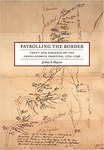
Patrolling the Border: Theft and Violence on the Creek-Georgia Frontier, 1770–1796
Joshua Haynes
Patrolling the Border focuses on a late eighteenth-century conflict between Creek Indians and Georgians. The conflict was marked by years of seemingly random theft and violence culminating in open war along the Oconee River, the contested border between the two peoples. Joshua S. Haynes argues that the period should be viewed as the struggle of nonstate indigenous people to develop an effective method of resisting colonization.
Using database and digital mapping applications, Haynes identifies one such method of resistance: a pattern of Creek raiding best described as politically motivated border patrols. Drawing on precontact ideas and two hundred years of political innovation, border patrols harnessed a popular spirit of unity to defend Creek country. These actions, however, sharpened divisions over political leadership both in Creek country and in the infant United States. In both polities, people struggled over whether local or central governments would call the shots. As a state-like institution, border patrols are the key to understanding seemingly random violence and its long-term political implications, which would include, ultimately, Indian removal.
Printing is not supported at the primary Gallery Thumbnail page. Please first navigate to a specific Image before printing.